Archives for category: Uncategorized

I have been thinking of the tenderness of good-byes. Most of the time, we don’t know the significance of departures — bye-bye, see ya later — but some are weightier. I remember my own heart-full and achy farewells to each of my children after settling them into dorm rooms for their first year of college. I blink back tears when I leave my mom after a visit. The rituals and meaning of good-byes matter and keep us connected, as did my dad’s words to me. Earlier this year, I held my aunty’s hand in her final moments and felt her warm, firm presence in my life even as she was leaving.

Each night at the hospital was another departure.

Setting up the bedside table, with the phone close,

the water, the glasses, I stalled a little, reluctant to

leave.  At last, I leaned over, kissed Dad.  He hugged

back and kissed my forehead with a deep inhalation,

taking in everything about me in that one breath,

just as he used to, tucking me in at night.

“Be good,” he said, as he always said.

“Be a good girl,” he said when it was time to

leave after bringing me to college for the first

time.  The dorm room was bleak with cinder

block walls and hard furniture.  My parents

had helped me carry suitcases and boxes up

the stairs.  I knew that inside one of those

boxes was a colorful bedspread.  Somewhere

there were posters and framed pictures.  But

at that moment, I felt lonely.  “I will,”

I answered softly.  This was a new life,

a different world, and suddenly I did not

feel at all ready.  But they left me anyway.

I watched them from my window, my eyes

blurry and blinking, as they walked away

along the sidewalk below.

Earlier this summer I watched a mother robin fly again and again to her nest of baby birds balanced on the down spout of my neighbor’s house. From an upstairs window I could look down and see the little beaks open for the bugs and worms. When they started to crowd each other and almost tumble out of the nest, they were ready to fly. Over the course of a day, two birds left the nest. The last one was smaller than the others, and the mother returned to the nest many times to continue nourishing her little bird. And then a few days later, it was gone. (With regard to the story below, I now know that we should not rescue wildlife — but there are professionals who know what to do.)

The baby bird cheeped its panic,

and we stood under the maple 

tree, afraid to pick it up, but unable

to walk away.  Let’s help it, my dad said, 

and that lesson of compassion was 

far greater than the later knowledge

of the will of nature.  We made a

bed in a shoebox, lined with a

heating pad and towel.  Dad fed it

thin rice cereal with an eye-dropper,

all of us gathered around him

holding the small bird tenderly

in his hand, coaxing it to open its beak.

Life was tenuous for the tiny bird, 

with paper-thin skin and wobbly head.

We did not know if it would live, but

we hoped, and kept watch.

Years later, I watched the nurse help 

Dad stand up to use the bathroom.  

The hospital gown revealed his

backside, thin and frail.

I remembered our little bird,

how it did get stronger, and

how one day we stood under

the maple and let it go, free.

I learned this weekend that one of my beloved aunties is near the end of her life, halfway across the world from me in Chiang Mai. I am thinking of her kindness and the many people she touched in her time on this earth, and that those warm thoughts I have of her are how any of us would want to be remembered. So I am remembering her and wondering how she is experiencing this transition, just as I tried to imagine my father’s journey years ago. I hope it is a time of clarity and light. 

Did I know you were moving

closer to the end?  If I did,

it attached deep inside, and

might explain the light.

Quick to answer, lingering

on your voice, telling you

about my day – everything

flowed freely.

We were on the edge of life,

in a sunlit field, fearless.

Open to words and each other.

Aware of the intricacies of breath.

Usually I have the privilege of understanding language, and just as all privilege is experienced, I take that knowledge for granted. But this morning at the gym, I listened yet did not understand two women speaking Eritrean in the sauna. The words were sharp with a distinct rhythm and I enjoyed the sound without meaning. I do not speak Thai, though it was my first language and I know it still runs through me. When I am surrounded by Thai, I take in a lot through certain known words, tone, and context. It is a particular way of experiencing language that allows presence and detachment at the same time. Words and meaning bubble up here and there, but the flow keeps moving. After having the gentle ease of that experience, the contrast of the language I know feels abrasive and jarring.

Here, on Sunday, spirituality seems so busy with words.

Where I had been, I had grown used to not knowing

language. There, my other senses were alive –

while the warm water of words passed over me,

barely noticed. But on Sunday, winter in Minnesota,

language pours from everything, and the cold wind

presses on stained glass windows, whistles along with words,

every one of which I know, but do not understand

so well as the raining rhythm of the monk’s blessing.

I have been teaching my 16-year-old son how to drive. He is a confident young man and his driving reflects that. One hand on the steering wheel, the other relaxed and gesturing as he speaks, I am somehow pulled into his easy conversation. He is a good driver. My body, which has had to learn how to breathe while he is driving, releases into the ride. I trust him. I trust my friend who drives a sports car a little too fast, but with a love for the curves of the road, the trees flashing by, the bumps that send us up for a moment, and our movement through the world. I am learning how to lean into this life.


I had already let go of the tightly woven safety

found in car seats and seat belts. So used

to relying on the security of metal locking

to metal, unbreakable fabric, foam cushioning,

that to trust the blood and muscle human

being driving the car felt daring. But

trusting all the other drivers on the road,

speeding and weaving, was surely foolish.

The rules of this world, half a world from home,

were different, and the children loved the

comfort of sitting on our laps while riding

through the busy streets. They trusted us

to hold tight to them. Should we not do the same?

We drove past entire families holding on

to one central driving figure, all balanced

on a small motorbike. The two wheels,

the buzzing motor, were just a tool. The

family, arms linked around waists, toddlers

sandwiched between, was the movement,

the pulsing, the life.

I remembered the thrill of the ride:

visiting Thailand as a child and riding

on the front of Little Uncle’s Vespa. My

feet on the narrow platform in front of

Uncle, standing up while he reached

around to hold the handlebars. I learned

to sway with the motion of the bike, to

lean when it turned. We were connected

to the city, part of the dance, part of

the circulatory system, curving

through veins of traffic.

One night, after dinner, we took a

tuk-tuk back to the hotel. All four

of us squeezed into the bench seat,

sticky skin to skin. The driver was fast,

swerving past traffic, leaning, pulling

us through. Quickly we learned to

sway with the motion of the tuk-tuk,

to not resist the movement. Connected

to the driver powering us to our beds

after a long day, we moved with him,

doing as he told us to do with each

turn. We trusted him. We felt safe.

I saw the peaceful knowing on my boys’

faces, and I understood what they knew.
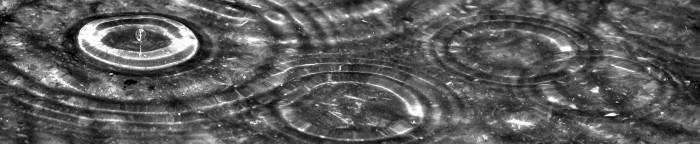
For immigrant families, starting a new life also means leaving something behind. My family, like so many others, left names. When my parents became U.S. citizens they dropped our long, difficult Thai name Komutdang and adopted the shortcut my father’s students used. “Mr. K” they called him. So we became Kays. My birth certificate has the old name crossed out, but still visible beneath the line, and the new one typed in next to it. My maternal grandfather had also been an immigrant, leaving India for Thailand. He chose a Thai name to match his new home. Though my name, a mix of our Indian/Thai roots and our new American identity seems completely mine, I recognize the fragility of both name and identity.

It rained on my birthday,

so they named me rain.

And, along with my father,

Komutdang,

I might be a red lotus,

floating on quiet water.

But with birth

comes assimilation

into the world,

where tiny feet

are pressed into ink,

onto paper,

and planted in

the soil of new life.

The lotus does not grow

on the Great Plains.

Here, rain comes dark

over the horizon,

with the rumble of thunder.

So the image evaporated,

sky slowly swallowed water,

leaving behind

just echoes of sound,

shadow of letters,

the fragile inheritance

of names.